
This article shares general educational information rather than a property-specific engineering assessment. A qualified professional should evaluate significant movement, structural damage and safety concerns.
What settlement means
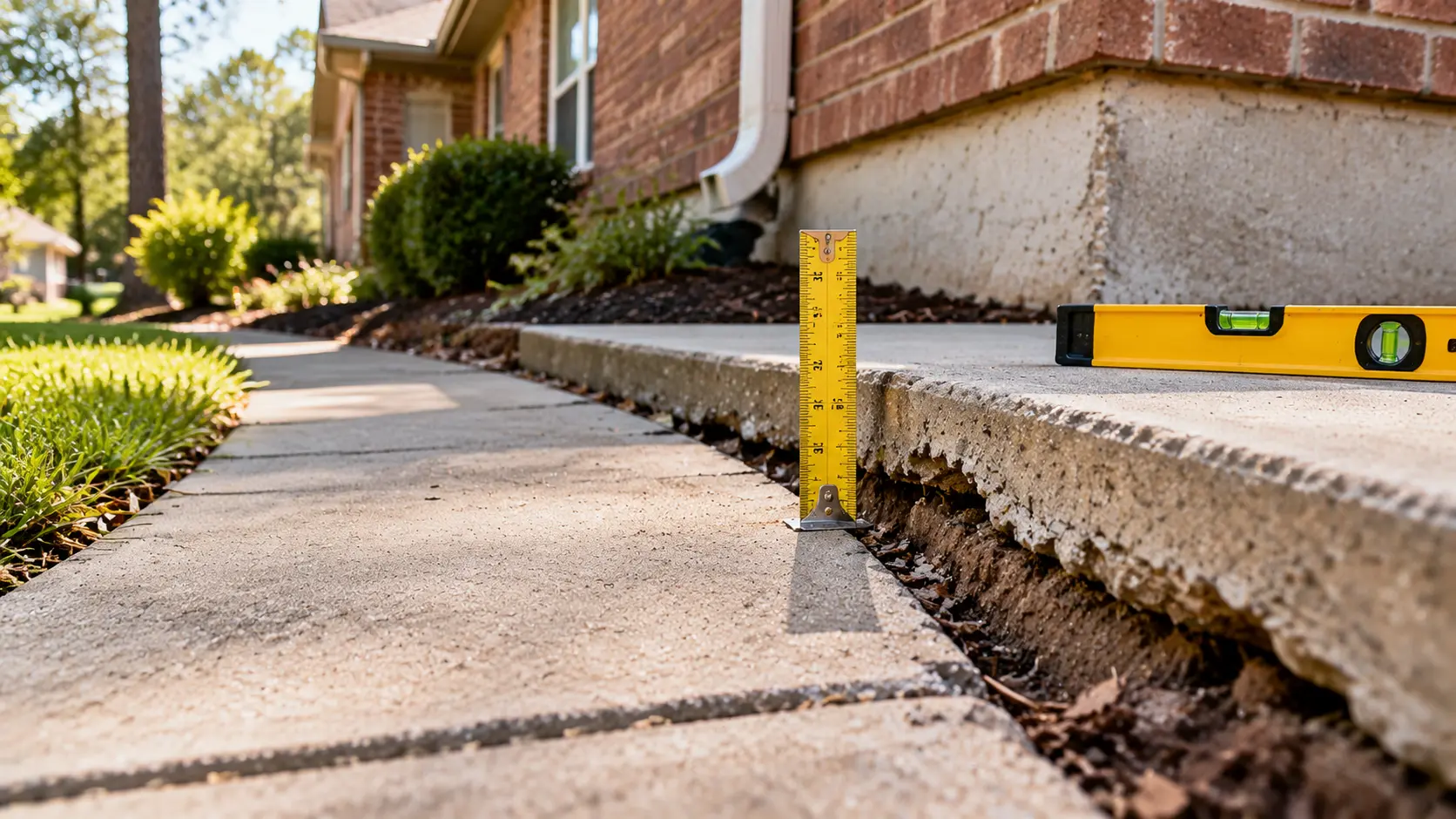
Settlement generally describes downward movement caused by compressing soil, loss of support, changes in fill or other causes. It may affect one part of a building more than another.
- Potentially sloping or displaced floors
- New gaps at walls or trims
- Changing elevations around openings
What heaving means
Heaving refers to upward movement that may occur under certain expansive soils or other mechanisms. An upward-moving area can make nearby portions appear low, complicating casual diagnosis.
Why an elevation survey is not always the complete answer
Measured elevations are helpful but need context: original construction tolerances, floor finishes, previous adjustments and the pattern of movement over time all matter. Interpretation may need engineering.
Repair decisions follow the mechanism
Support piers may be suitable for certain settlement cases but do not automatically resolve upward soil pressure. Moisture correction, monitoring and design changes can also be relevant.
Understand the direction of movement
Settlement is generally downward movement related to changes in the support beneath a structure, while heaving describes upward movement. Both can distort doors, crack masonry and change floor elevations. A high spot on a floor map does not automatically prove that soil pushed it upward; the rest of the building may have settled around it. Original construction tolerances and earlier repairs further complicate comparisons. A professional should consider the pattern of damage, the building's load path and available history before deciding which mechanism is operating. Ask the evaluator to explain its reasoning in ordinary terms and identify observations that would contradict it. An inaccurate assumption about movement direction can lead to unsuitable repairs.
What can cause settlement
Potential contributing factors include consolidation of supporting soil, inadequate compaction of placed fill, erosion, disturbed utility trenches and changes in groundwater or drainage. The actual cause depends on local conditions and the construction details. A shallow depression near one corner does not necessarily mean every support around the house needs modification. An inspection should consider where movement seems concentrated and whether conditions beneath the affected area differ from adjacent ground. An engineer may recommend further investigation when the cause remains uncertain or the consequences are substantial. The repair goal could be improving support, addressing a contributing site condition, monitoring or a combination. The selected scope should reflect evidence rather than a generic claim that all cracks equal settlement.
How soil expansion can produce heaving
Some clay-rich materials can increase volume when moisture conditions change, which may exert upward forces on a foundation. The response depends on the soil mineralogy, depth, confinement, design and moisture history. This is not the same as assuming that all East Texas soil behaves as one expansive clay deposit. Changes in irrigation, surface runoff or buried utilities may alter moisture near part of the building. Ask how upward movement was distinguished from differential settlement and what site evidence supports that conclusion. A system designed to resist a downward loss of support may not address upward pressure in the same way. Careful diagnosis is essential before agreeing to a repair marketed as leveling.
Why cracks do not identify the mechanism alone
A diagonal drywall crack may appear when one area moves down, when another rises or when framing changes for unrelated reasons. Masonry gaps and sticking windows provide clues but are not definitive without context. Look at the combination of symptoms, dates, previous modifications and measured elevations. Photograph areas from consistent angles and note whether a crack changes during wet or dry periods, while recognizing that timing alone does not prove causation. Distinguish veneer damage from the underlying structural supports. Avoid relying on internet photographs to diagnose a house. A qualified evaluator should identify what is known, what is inferred and what information is missing before recommending a structural method.
Using elevation measurements correctly
Relative elevations can show that one portion of a floor is higher than another, but they usually do not establish the original construction level. Floor finishes, remodeled areas, past foundation adjustments and wood framing variations can influence readings. Measurements at different times can be more informative when the same technique and reference points are used. Ask for a map or written summary rather than an unexplained statement that the house is several inches out of level. The evaluator should relate readings to observed distress and explain limitations. For high-stakes decisions, an independent professional engineer can help interpret the pattern alongside structural and site factors, rather than treating a single survey as a final diagnosis.
Drainage history matters but is not proof
Gutters, downspouts, grading, irrigation and plumbing can alter moisture around a foundation. A prolonged wet period or dry season may coincide with distress, but correlation does not establish the actual structural mechanism. Inspect runoff paths safely and record standing water, known leaks or recent landscape changes. Do not suddenly flood or dry the soil in an attempt to correct a suspected heave without qualified advice. Moisture management may be part of a broader plan, while damaged supports or framing may need separate work. A good assessment explains what water-related conditions were observed and how each is expected to influence the proposed repair. A broad watering prescription is not a substitute for diagnosis.
Different mechanisms require different approaches
Where a section has lost support through settlement, suitably designed underpinning may be one option. A heaving condition can require other investigation and moisture or structural strategies; adding supports intended for settlement is not automatically a cure. The engineer or contractor should explain the proposed movement mechanism and the expected action of each repair element. Ask what would happen if the ground continues to change and what conditions the chosen system is designed to tolerate. Some situations call for monitoring or testing before major work, especially when the observations do not clearly identify a cause. Avoid contracting for a method based only on its popularity or the promise to level a building.
When independent engineering is especially useful
If multiple companies offer conflicting diagnoses or expensive pier layouts, a Texas-licensed professional engineer who is not selling the repair can provide a separate assessment within a defined scope. Clarify whether the fee includes an on-site inspection, measurements, written findings, testing recommendations or an actual repair design. An engineer cannot guarantee certainty without adequate information and may recommend additional investigation. The value of an independent evaluation is that it identifies assumptions and helps compare proposals against the same structural questions. Verify credentials through the Texas Board of Professional Engineers and Land Surveyors when applicable. Keep the signed report and ensure any contractor's proposal follows the conclusions or explains its differences.
What records to collect before repairs
Save dated photographs, previous reports, repair diagrams, utility repair history and information about drainage modifications. Identify which doors or windows have changed and whether symptoms recur after earlier cosmetic patching. Where safe, note the area and time of each observation rather than attempting to measure the building with improvised equipment. If a prior elevation survey exists, offer it to the next evaluator with the date and method. This context may help distinguish old construction irregularity from ongoing movement. Keep both the diagnostic findings and any final repair documentation so later professionals can compare conditions. The aim is a reliable history, not a homeowner's unverified conclusion about soil movement.
What to ask about a stabilization proposal
Ask whether the work is intended to limit further settlement, adjust existing elevations, address moisture-related heave or replace damaged structural materials. Request the target area, locations and quantities, installation verification criteria and realistic adjustment limits. Find out whether the proposed method has a risk of damaging finishes, plumbing or masonry. Ask for a written explanation of what is excluded, including drainage, landscaping and cosmetic restoration. If the contractor predicts a precise lift, ask how it will be measured and what happens if the structure cannot safely reach that target. The best contract states achievable objectives and records how completion is established rather than promising that every crack disappears.
A homeowner example: the misleading high point
Suppose one room reads higher than an adjacent hallway and diagonal cracks appear near a doorway. It may be tempting to call the room heaved and prescribe soil drying. But the hallway may have settled, a previous remodel may have changed floor thickness or timber framing might be deflecting. An evaluator needs more than the relative reading to choose among these explanations. Photographs, structural details, earlier measurements and examination of drainage or plumbing may point toward the actual mechanism. The example shows why repair choices should not follow a single high-low diagram. When the mechanism is unclear, further targeted assessment can be safer and more economical than an immediate disruptive repair.
Practical next steps for East Texas homeowners
Start by documenting symptoms and seeking qualified evaluation when movement appears substantial or progressive. Identify any immediate safety issues and avoid affected areas if structural integrity is in doubt. Ask the evaluator to distinguish settlement from heaving and name the evidence for that distinction. Review soil maps only as regional context, not as a property-specific verdict. Compare the resulting scope, measurable goals and warranties before commissioning work. Where opinions disagree, consider an independent licensed engineer. The information on this page helps you prepare informed questions; it does not diagnose the individual house. The contracted provider remains responsible for any inspection, design, installation and written warranty promised to the homeowner.
Homeowner action checklist
Use the questions below to prepare for a professional discussion rather than trying to diagnose or lift your home yourself.
- Ask which areas moved and in what direction
- Keep earlier measurements where available
- Look for drainage and plumbing contributors
- Request the reasoning behind any proposed pier locations
- Consider an independent engineer for conflicting opinions
What should happen next?
When information is incomplete or contractors provide conflicting recommendations, consider an independent Texas-licensed professional engineer for a defined assessment. Compare written repair scopes and warranty terms before selecting a provider.
If immediate structural safety is uncertain, avoid affected areas and contact the appropriate qualified professional or local emergency resource.