
This article shares general educational information rather than a property-specific engineering assessment. A qualified professional should evaluate significant movement, structural damage and safety concerns.
Trace roof water first
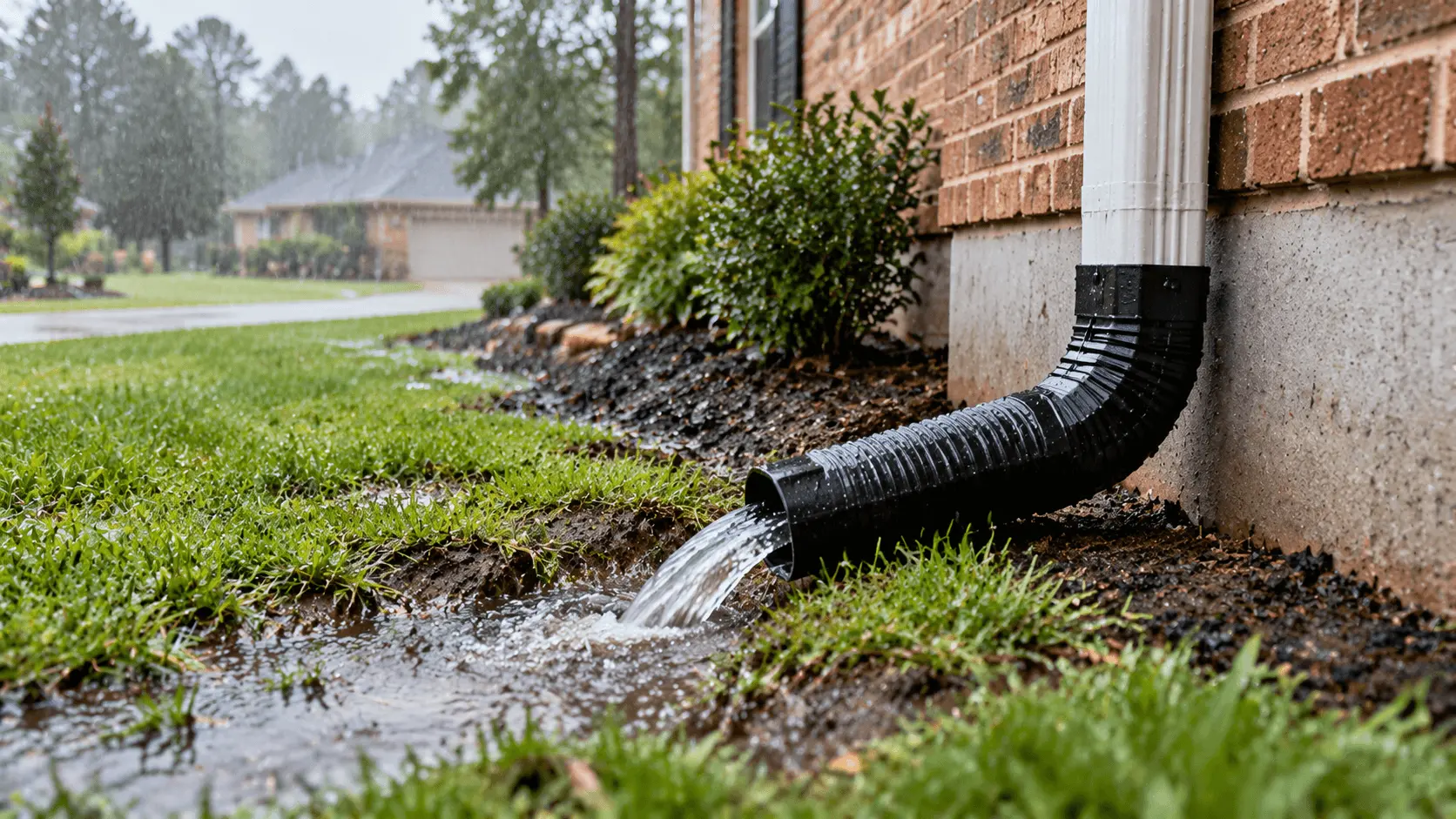
Gutters and downspouts capture significant rainfall from the roof. Identify where they discharge, whether they are clogged and whether water is being concentrated next to the structure.
- Repair detached or overflowing gutters
- Extend outlets to appropriate discharge points
- Avoid directing water onto adjacent property
Check grading and hardscape surfaces
Patios, driveways, flowerbeds and settlement near walkways can change the runoff path. Surface grading and swales may help under suitable site conditions.
When subsurface drains make sense
French drains and similar systems should have suitable placement, filters and a lawful, functional outlet. A buried pipe without a reliable discharge route can create problems of its own.
Drainage is not the same as structural repair
Managing moisture can address contributing conditions but does not automatically restore damaged joists, cracked concrete or lost support. Assess existing movement separately.
Start by walking the runoff path
The most useful drainage inspection begins with where rainwater lands, moves and leaves the lot. Roof water, downspouts, driveways, patios, retaining walls and changes in ground elevation all influence the route. Observe during safe rainy conditions or inspect visible marks afterward; do not stand in fast-moving water or excavate near utilities. Note puddles against the slab, soil erosion, damp crawlspace areas and outlets that discharge toward neighboring property. A low spot can be a symptom of settlement, not just a grading defect. Draw a simple sketch showing flow directions and features that concentrate runoff. This helps a qualified drainage professional propose a site-specific solution instead of installing a generic pipe without a working outlet.
Gutters and downspouts as first checks
Clogged, undersized or detached gutters can pour roof water beside a foundation. A short downspout may discharge into a flowerbed or walkway that slopes back toward the house. Inspect gutters from a safe position and arrange professional cleaning where ladders or roofs create hazards. Ask where each outlet will carry water during a heavy storm and whether that location is suitable. Underground downspout extensions require attention to blockages, slopes and accessible cleanouts. Directing water beyond one foundation corner is not an improvement if it creates erosion or moisture problems elsewhere. Maintain the system after installation, since clogged drains can redirect water back toward the structure and hide the actual problem until rain returns.
Positive grading and surface swales
Surface grading seeks to move runoff away from vulnerable building edges to an appropriate discharge route. A swale is a shaped surface channel that can help steer water without relying entirely on buried pipes. Existing driveways, decks and neighboring grades may limit feasible slopes. Avoid piling soil against brick veneer, weep openings, siding or framing in an attempt to create positive grading. A professional must consider finished-floor height, property lines, erosion and local requirements. A shallow-looking depression can move significant water during intense rainfall, so the plan should account for where it ends. Surface grading is often part of a drainage strategy, but it does not replace evaluation of structural damage or buried leaks.
French drains and buried collection systems
A French drain is not simply a perforated pipe placed beside a foundation. An effective design considers what water is being intercepted, the surrounding soil, filter materials, pipe elevation, maintenance access and a lawful outlet. An incorrectly placed system can collect water without removing it or introduce water near a vulnerable structure. Ask whether the proposal handles shallow runoff, subsurface seepage or another specific issue and why a buried drain is preferable to grading. Find out where the collected water discharges and who maintains the outlet. The term French drain is often used broadly, so request drawings and component details. A buried drain with no reliable destination may create a more difficult problem.
Crawlspace moisture and drainage
Raised-floor houses can suffer from wet soil, standing water, damp wood and poor management of runoff around the perimeter. A drainage contractor should assess where the moisture originates before recommending pumps, barriers or vents. A supply leak, roof runoff and seasonal groundwater can require very different interventions. Structural framing should be inspected separately when there are sagging floors or deteriorated supports. Avoid crawling into a wet or electrically hazardous space yourself. Ask whether the proposal includes appropriate exterior corrections, interior collection or other measures, and how performance will be verified after heavy rain. Moisture control should not be presented as automatic replacement for damaged joists, beams or footings.
Drainage and changing soil moisture
In some soils, changes in water content can influence shrinkage or expansion; elsewhere, erosion or softening may be relevant. East Texas soil profiles vary across towns and individual properties. Do not assume every wet yard has the same clay layer or the same structural response. The USDA NRCS Web Soil Survey can provide mapped background, but it cannot identify every buried fill or determine the mechanism at one house. A drainage design should be proportional to the observed runoff and site conditions. Avoid universal instructions to saturate the soil or withhold all water. If major foundation movement is present, an engineer may need to distinguish drainage factors from structural defects before choosing an integrated plan.
When a sump pump makes sense
A pump can help move collected water where a gravity outlet is not practical, but it requires power, maintenance and an appropriate discharge destination. Before adding equipment, determine whether the collected water is surface runoff, seepage or a plumbing problem. Ask about pump capacity, controls, backup options, alarm features and the behavior of the system during a power failure. A poorly located discharge can send water straight back to the foundation or onto a neighboring lot. Pumps should complement a plan that manages inflow instead of masking a preventable source. Make sure the proposed system can be inspected and maintained, and that the contractor explains who is responsible for ongoing service.
Driveways, patios and hardscape drainage
Concrete surfaces can settle or be built with slopes that send water toward a wall. A patio that meets the foundation may concentrate runoff at a joint, while a walkway can act as a channel in heavy rain. Look for ponding, erosion and places where landscape beds trap water against the structure. Options may include adjustments to surface grading, appropriate collection points or repair of affected flatwork, depending on site constraints. A driveway slab is not the same structural element as the house foundation, so the proposed work should distinguish them. Ask how water will travel after the repair and whether the solution creates new trip hazards, maintenance problems or drainage conflicts.
Evaluating buried plumbing concerns
Persistent wet soil near a slab or crawlspace can result from conditions unrelated to rainfall, including plumbing leaks. Signs may include unusually high water usage, unexplained damp areas or recurring moisture after dry weather. A licensed plumbing professional may need to assess the relevant lines. Drainage landscaping alone will not correct a pressurized leak or damaged drain pipe. Before excavating or modifying grades, ask whether utilities should be located or tested. Some structural assessments require separate plumbing information to interpret movement patterns. Keep test reports with the other foundation records. Avoid assuming that a wet patch demonstrates a broken line without proper investigation, and respond promptly to active leaks that could damage the property.
Discharge, neighbors and local requirements
Moving unwanted water away from one part of a property is only useful when there is a suitable place for it to go. A proposed outlet should account for topography, erosion, property boundaries and any applicable local rules. Do not redirect concentrated water into a neighbor's yard or onto public paths without proper review. Ask a contractor where water will flow during ordinary rainfall and heavier storms, and whether the design has an overflow route if the primary outlet blocks. Buried pipes and surface swales both require maintenance access. A drawing showing collection points and discharge routes is often more informative than a bid that lists linear feet of drain without describing the destination.
How to compare two drainage proposals
Compare what water source each plan addresses, where it captures runoff and where the water leaves the site. Check pipe materials, filters, access for cleaning, grading details and restoration of affected landscaping or hardscape. One contractor might recommend a buried system while another identifies an easily corrected downspout discharge; those are different problem definitions. Ask both to explain the evidence for their solution and what conditions remain untreated. Confirm whether structural repairs are separate and whether the quoted work carries a warranty or maintenance requirement. Avoid selecting a proposal solely on footage installed. The measure of a useful plan is how well it manages the observed water pathways without introducing new problems.
Maintenance and checking whether the fix works
After drainage changes, inspect visible outlets and collection points during safe weather conditions. Keep gutters and accessible drain openings clear, watch for renewed ponding and note whether erosion develops at the discharge. Do not assume that a dry surface means subsurface moisture or foundation movement has been resolved. If the home already shows significant structural distress, follow the separate assessment or monitoring recommended by qualified professionals. Photograph problem areas before and after work so changes can be interpreted over time. The maintenance plan should identify who cleans pipes, checks pumps and repairs damaged surface grading. Good drainage work is measurable through observed water flow and upkeep, not a promise that a house will never crack.
Homeowner action checklist
Use the questions below to prepare for a professional discussion rather than trying to diagnose or lift your home yourself.
- Observe runoff during safe rain conditions
- Check downspout discharge and gutter function
- Identify low spots and erosive flows
- Discuss outlets and maintenance
- Investigate persistent moisture or suspected leaks
What should happen next?
When information is incomplete or contractors provide conflicting recommendations, consider an independent Texas-licensed professional engineer for a defined assessment. Compare written repair scopes and warranty terms before selecting a provider.
If immediate structural safety is uncertain, avoid affected areas and contact the appropriate qualified professional or local emergency resource.