
01
Slab Foundation Repair
Settlement, diagonal wall cracks and changes in concrete slab elevation can have different causes. A proper assessment considers structure, drainage, plumbing and soil conditions.
Explore slab foundation repairEAST TEXAS FOUNDATION INFORMATION
Foundation Repair East Texas helps homeowners understand cracks, uneven floors, slab settlement and pier-and-beam concerns, and explore next steps with participating local repair providers.
Know what the warning signs could mean. Compare repair approaches. Ask better questions before approving work on your home.
Independent information website with paid phone connections · No in-house repair crews · Provider availability varies

A BETTER STARTING POINT
A crack across a wall, a bedroom floor that slopes, or a door that will not latch can raise a big question: Is my house moving, and what should I do?
Many houses in East Texas use concrete slabs or elevated pier-and-beam foundations. Those systems respond differently to site drainage, soil behavior, framing conditions, plumbing leaks and construction details. There is no single repair that suits every property.
This independent guide is organized around the decisions homeowners actually make: recognize the symptoms, understand possible causes, learn the differences between repair methods and compare written proposals. We explain limitations openly so you can judge the next step without relying on unsupported promises.
FOUNDATION SOLUTIONS EXPLAINED
Explore the repair categories homeowners most often research. Each service page explains common symptoms, evaluation considerations, and questions to ask a third-party provider.
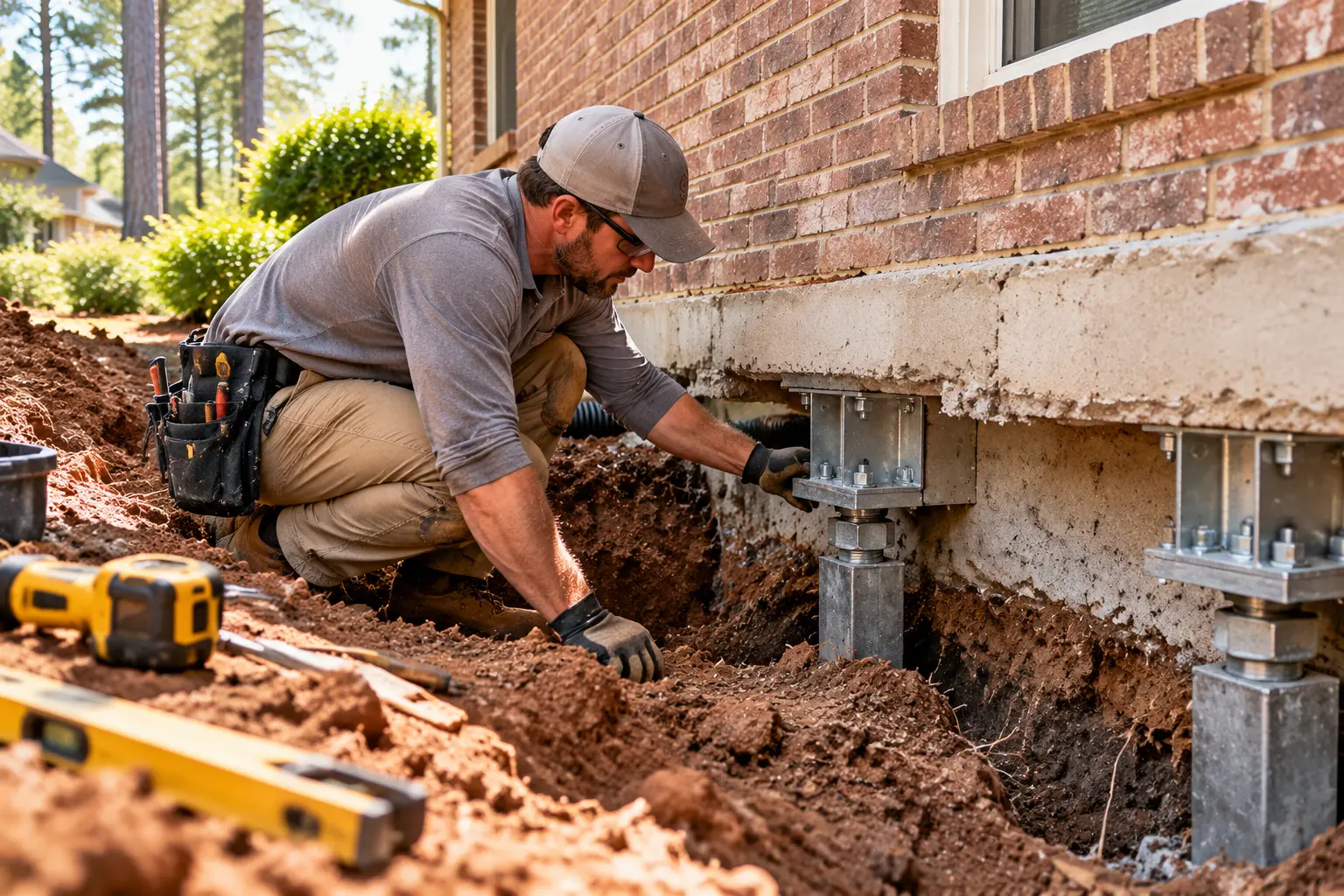
Settlement, diagonal wall cracks and changes in concrete slab elevation can have different causes. A proper assessment considers structure, drainage, plumbing and soil conditions.
Explore slab foundation repair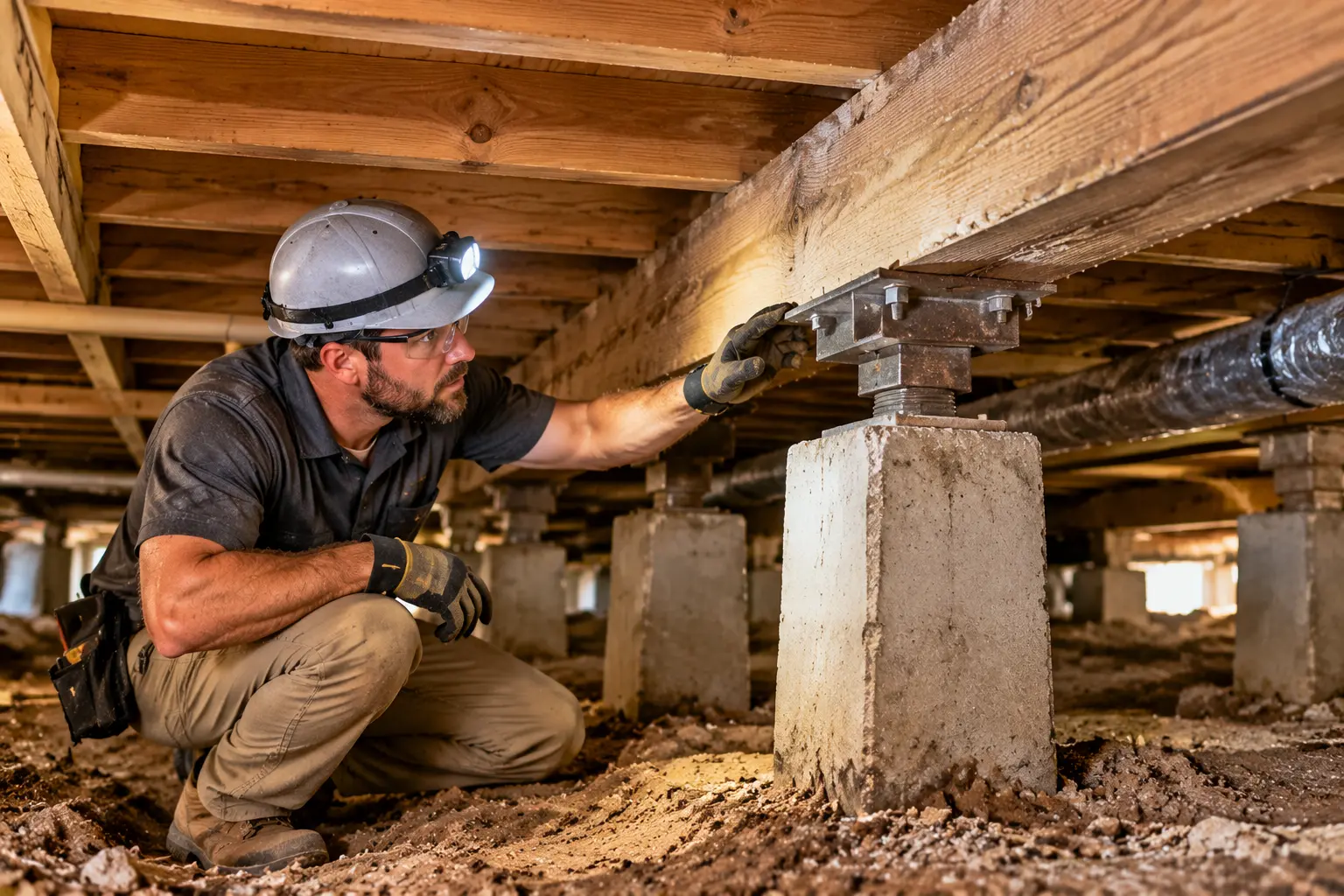
Raised foundations may be affected by deteriorated wood, support failure, moisture or movement beneath the house.
Explore pier & beam foundation repair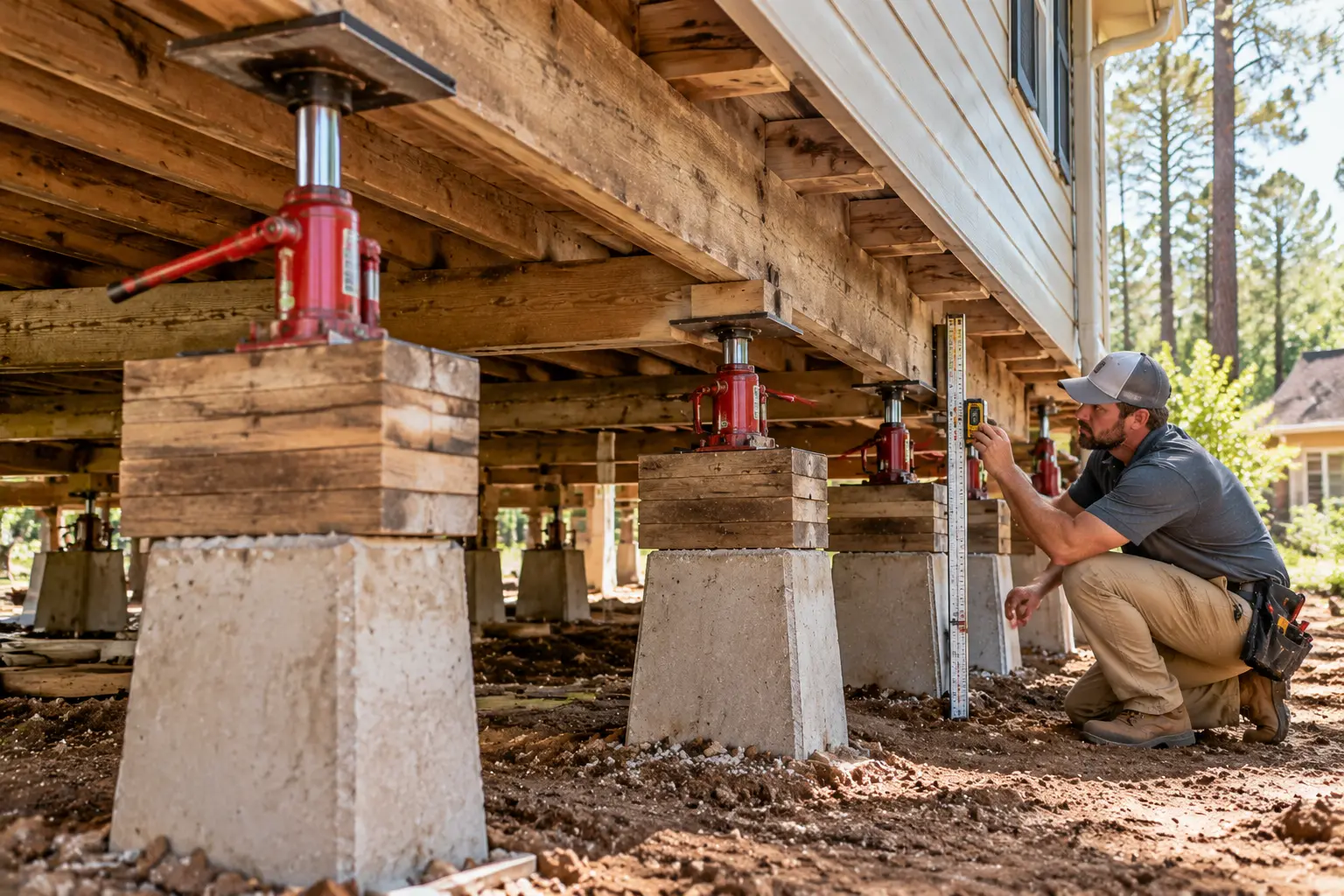
An uneven floor does not automatically mean the entire house needs lifting. Understanding why elevation changed comes first.
Explore house leveling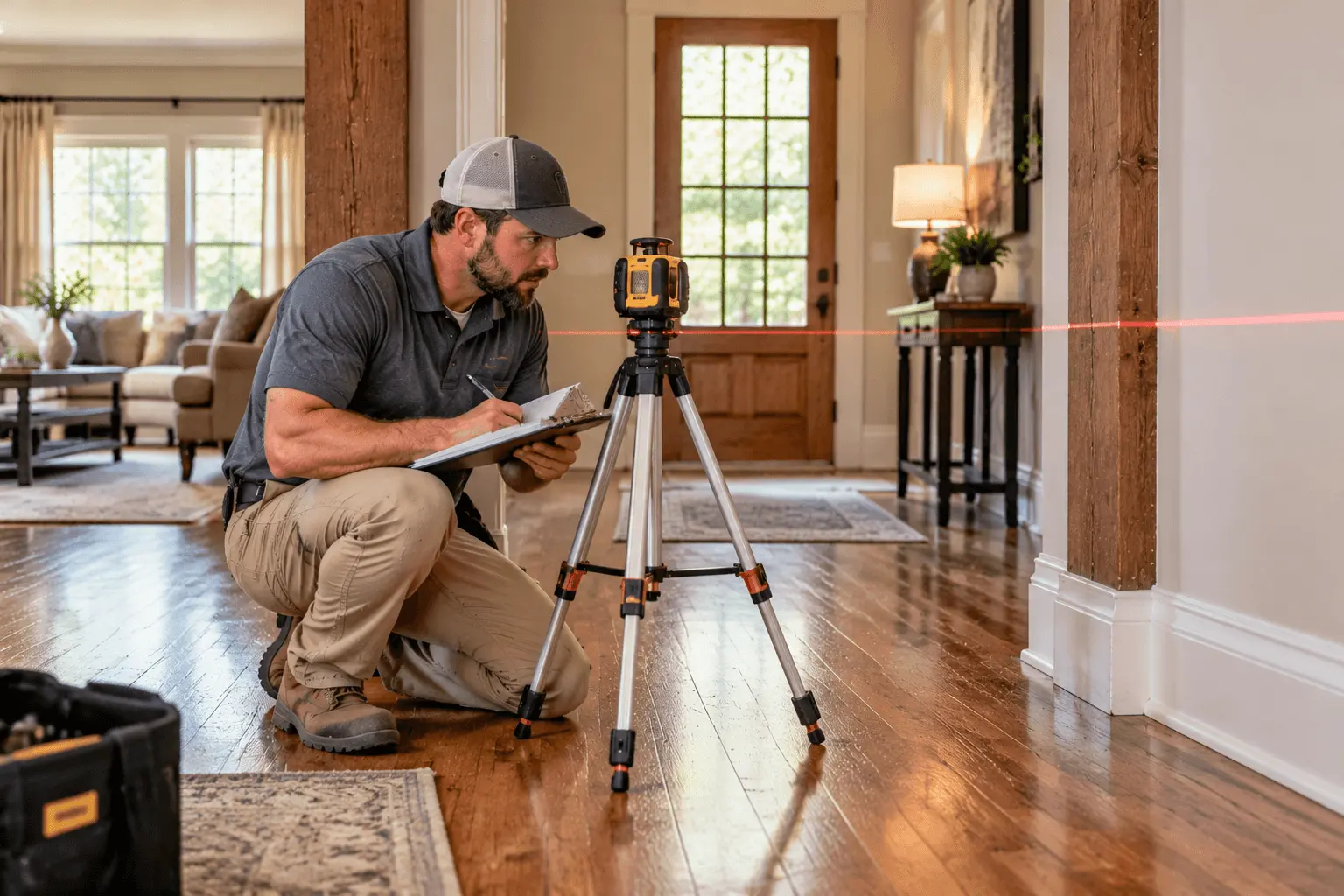
An assessment can document warning signs and help determine whether structural engineering advice is warranted.
Explore foundation inspections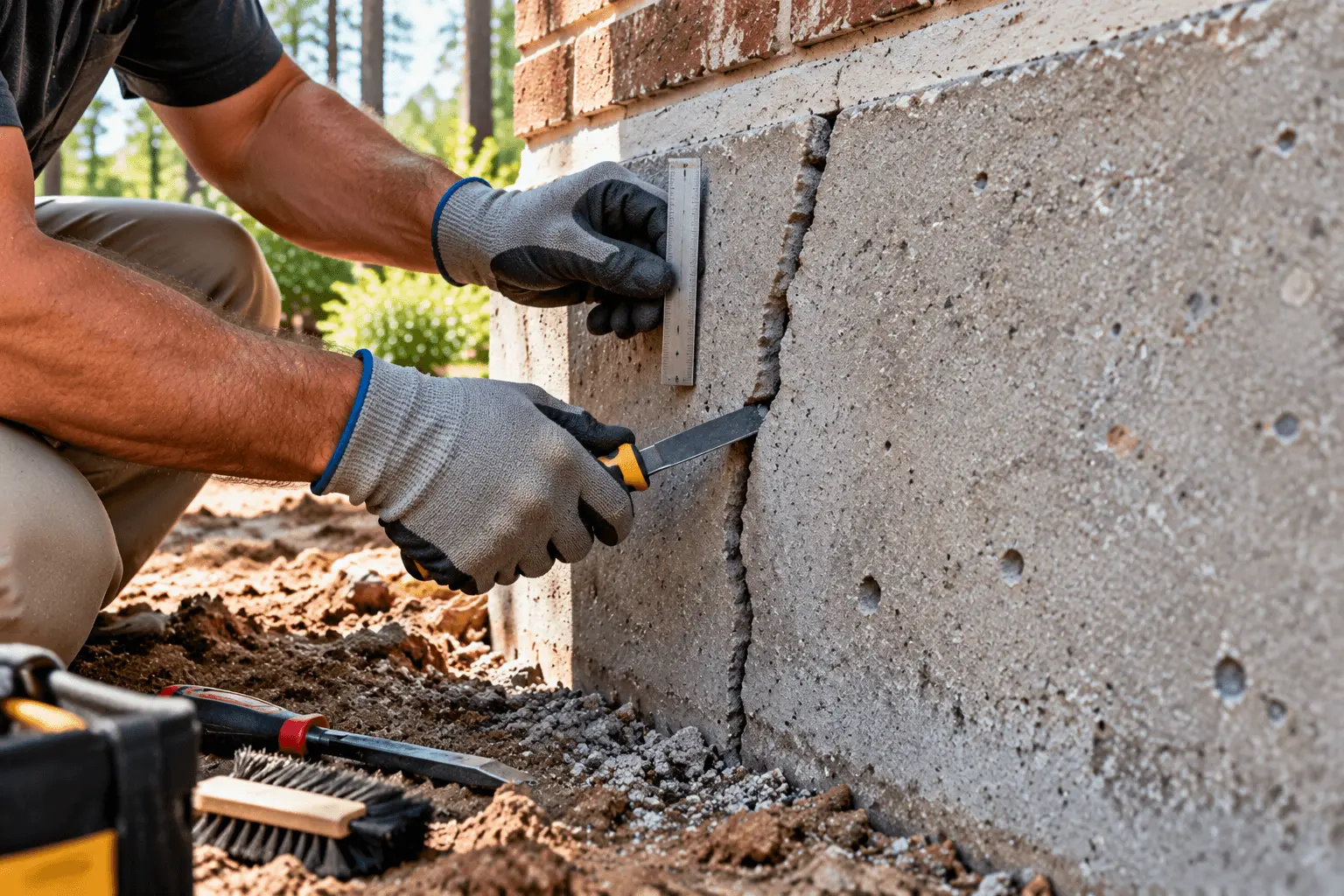
Hairline cracks, displaced cracks and recurrent masonry cracking require different evaluation and repair decisions.
Explore foundation crack repair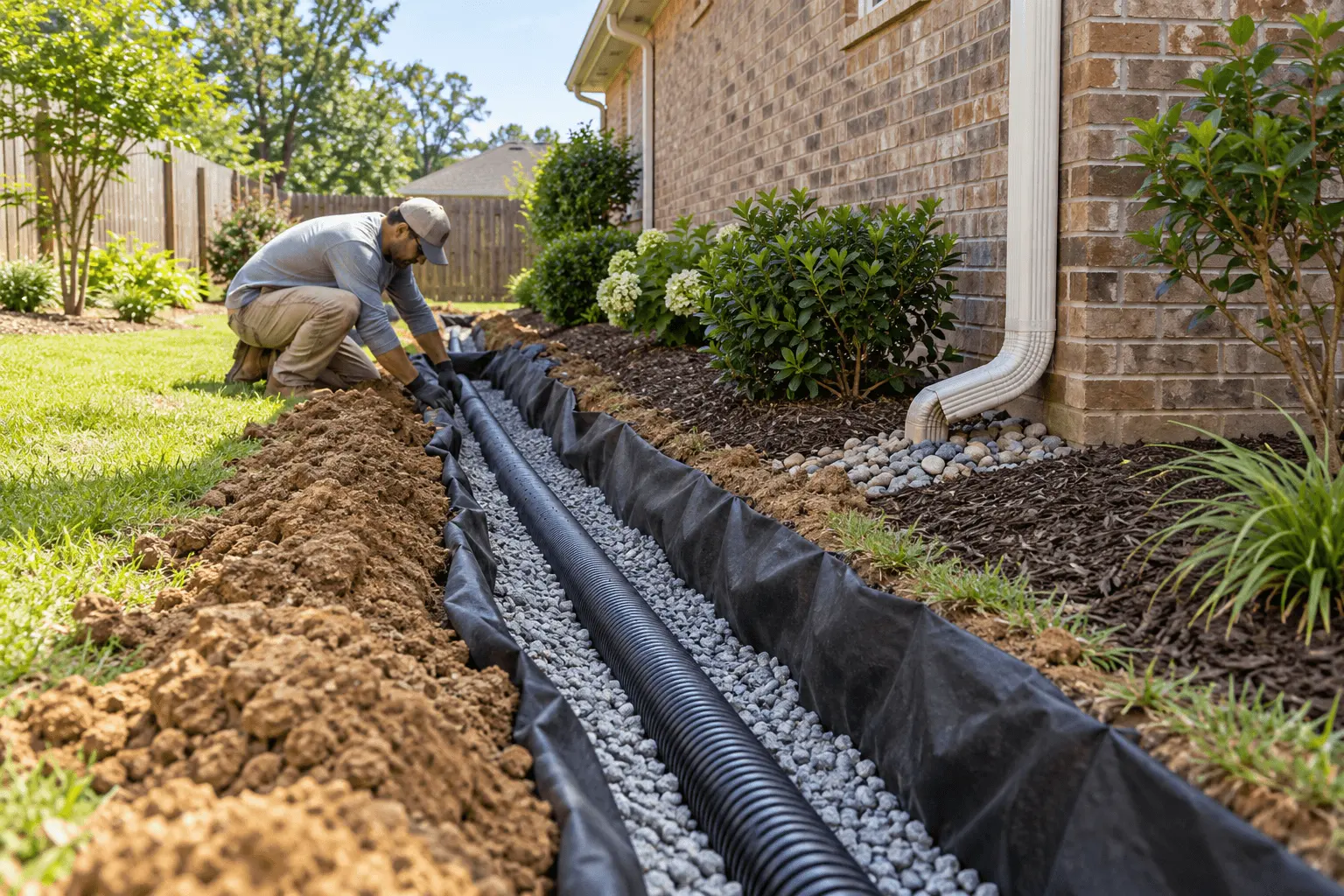
Effective gutters, grading and runoff management can reduce moisture problems around a house.
Explore foundation drainage solutions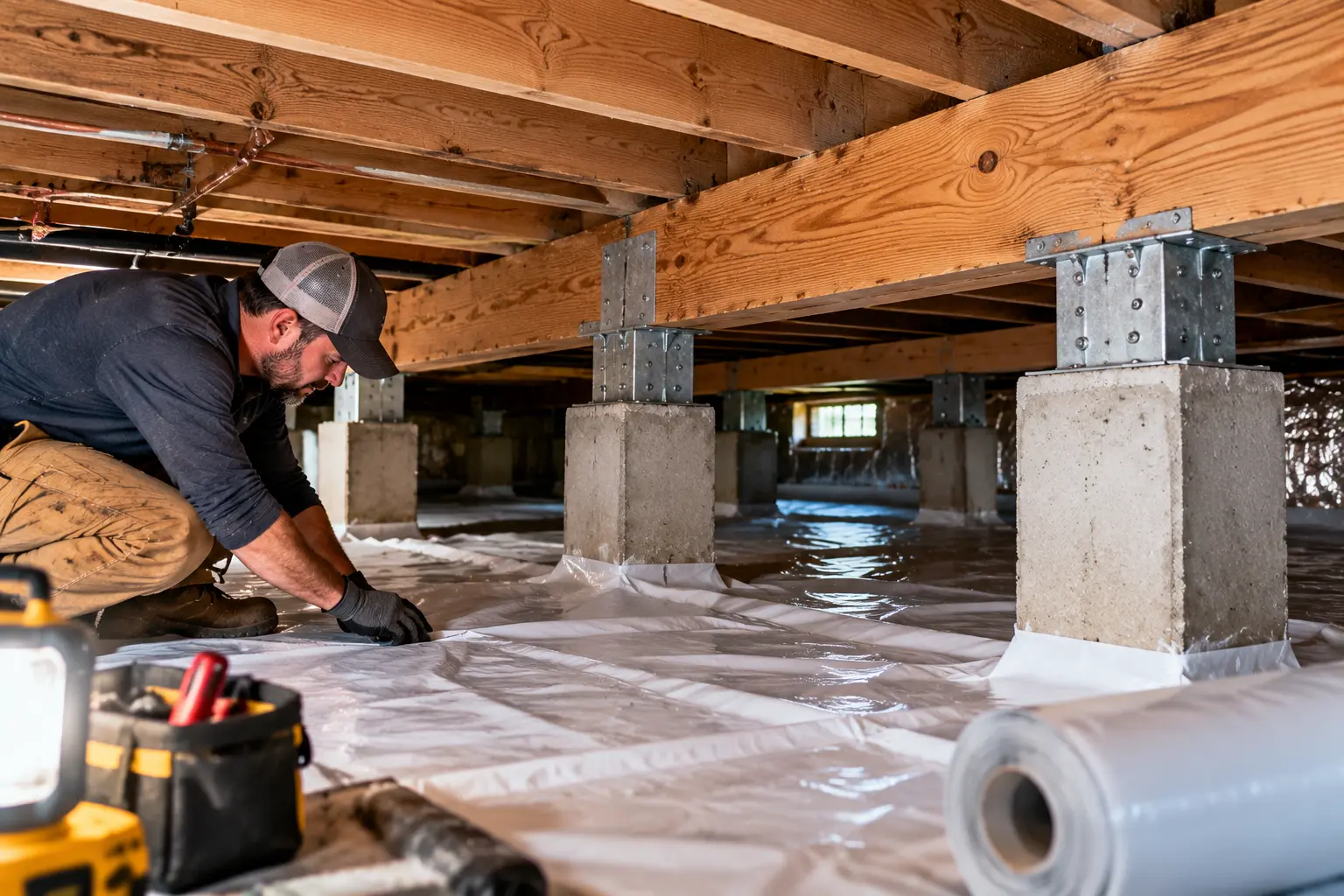
A wet or poorly supported crawlspace can contribute to floor damage and structural concerns.
Explore crawl space repair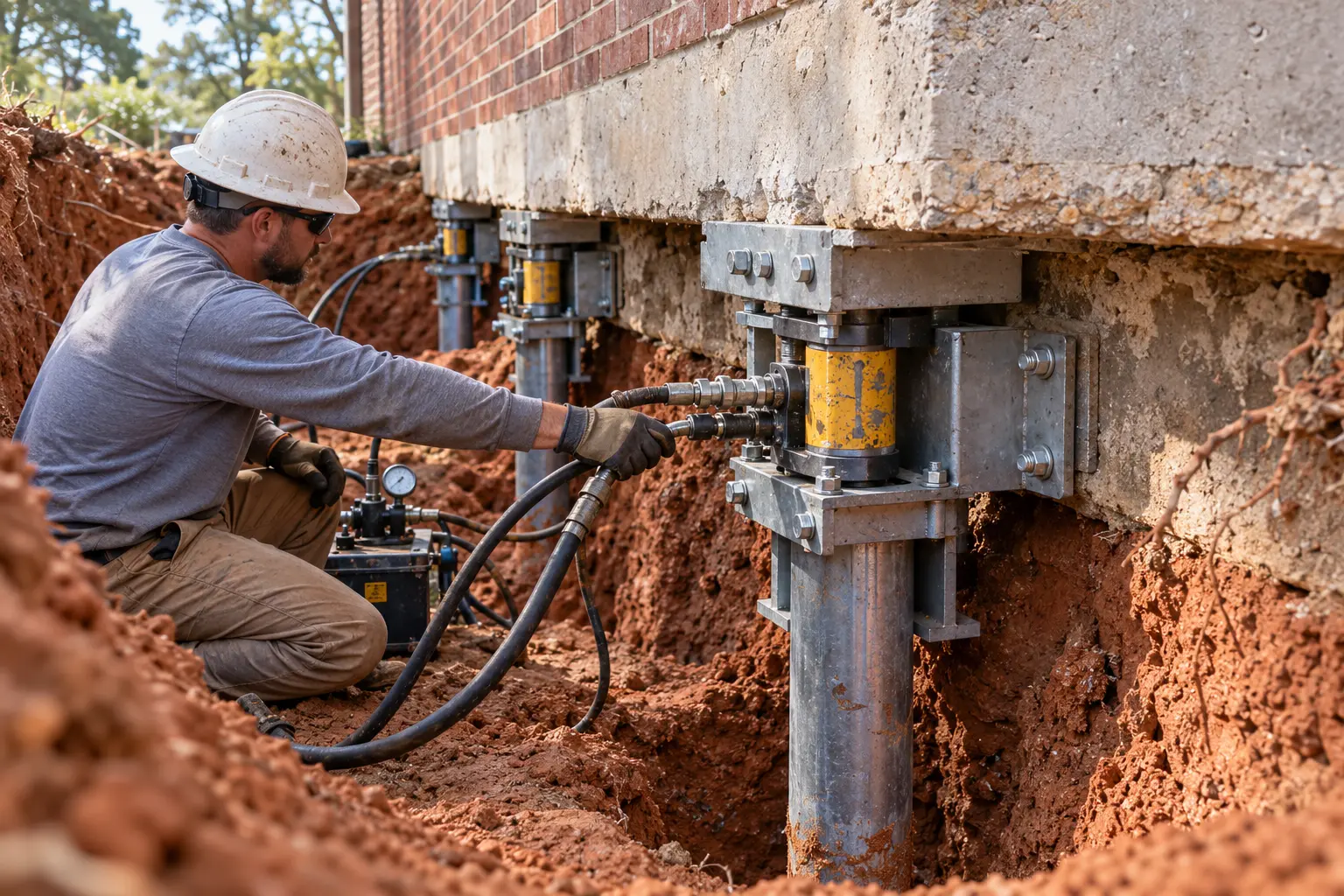
Piers can stabilize certain foundations by transferring loads to suitable bearing strata.
Explore foundation underpinning
Uneven driveways, patios or sidewalks may be repairable without treating them as structural house foundations.
Explore concrete levelingActual services, methods and availability depend on individual participating contractors. An inspection or repair claim is not made on this website's behalf.
WHAT YOUR HOME IS TELLING YOU
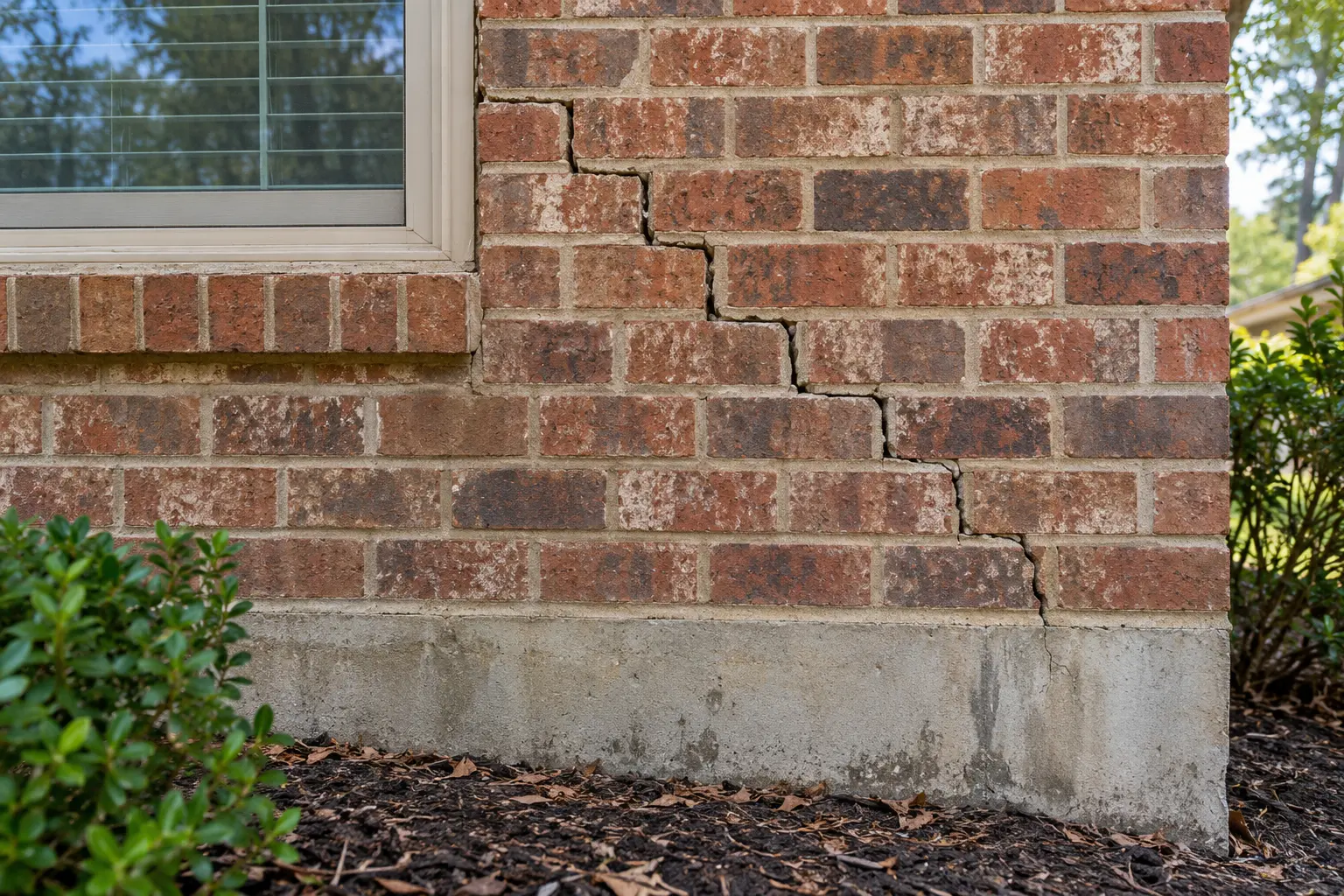
Watch for patterns, not just one isolated blemish. The location, progression and combination of symptoms matter more than a broad online checklist.
SIGN 01
Stair-step masonry cracks, widening drywall cracks or cracks with displacement can warrant a closer look. A fine cosmetic crack alone does not establish foundation failure.
SIGN 02
Uneven floor elevations may reflect movement below a slab, deteriorated pier-and-beam framing, or other structural conditions. Measure the symptoms before selecting a fix.
SIGN 03
New gaps at frames, binding doors and windows that no longer close smoothly can appear alongside differential movement. Humidity and ordinary wear can also be factors.
SIGN 04
Ponding near the perimeter, gutters discharging beside the slab and negative grading can create unfavorable moisture conditions. Correcting drainage may be part of the solution.
SIGN 05
Exterior gaps at openings, joint separation or recurring repairs deserve documentation, especially when several symptoms develop together.
SIGN 06
Changing moisture can affect some regional soils. Patterns over time matter, but weather history and photographs cannot replace site-specific evaluation.
WHY THE REGION MATTERS
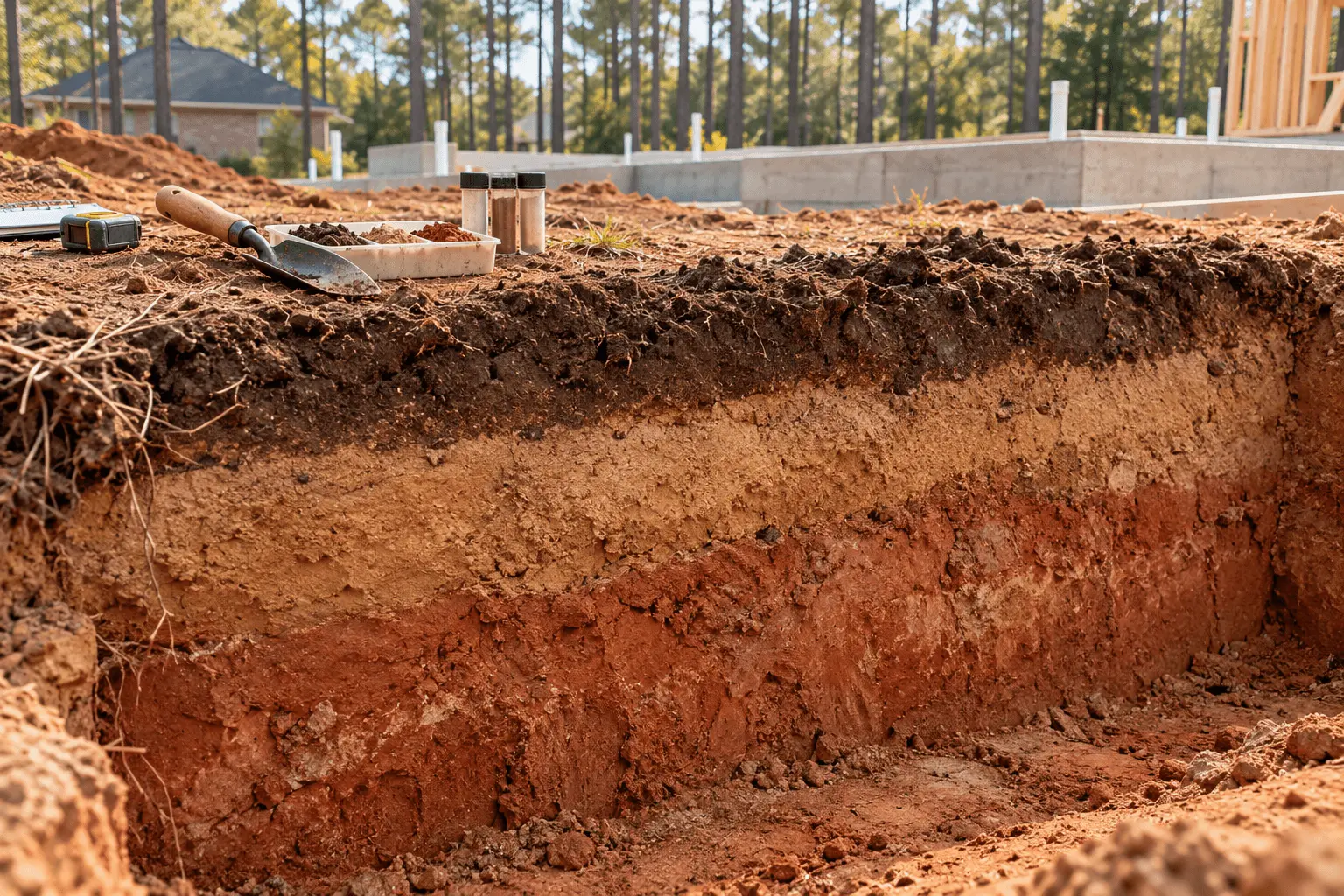
The Pineywoods region is not one uniform layer of “expansive clay.” Soil conditions can change across counties, and even across a single property.
Texas A&M Forest Service describes much of the Pineywoods as having deep sandy-loam soils, while USDA soil descriptions also identify clay-enriched subsurface horizons in parts of the regional landscape. Moisture behavior, slope, drainage and construction all matter when evaluating a particular foundation.
Extended wet periods, concentrated roof runoff, plumbing leaks, poor grading and drying conditions may create moisture differences around a house. Certain soils respond to these changes through shrinkage or swelling, but the correct interpretation requires site evidence, not an assumption based on ZIP code.
FOUNDATION TYPES
Correctly identifying the foundation system is one of the first steps toward understanding repair proposals.
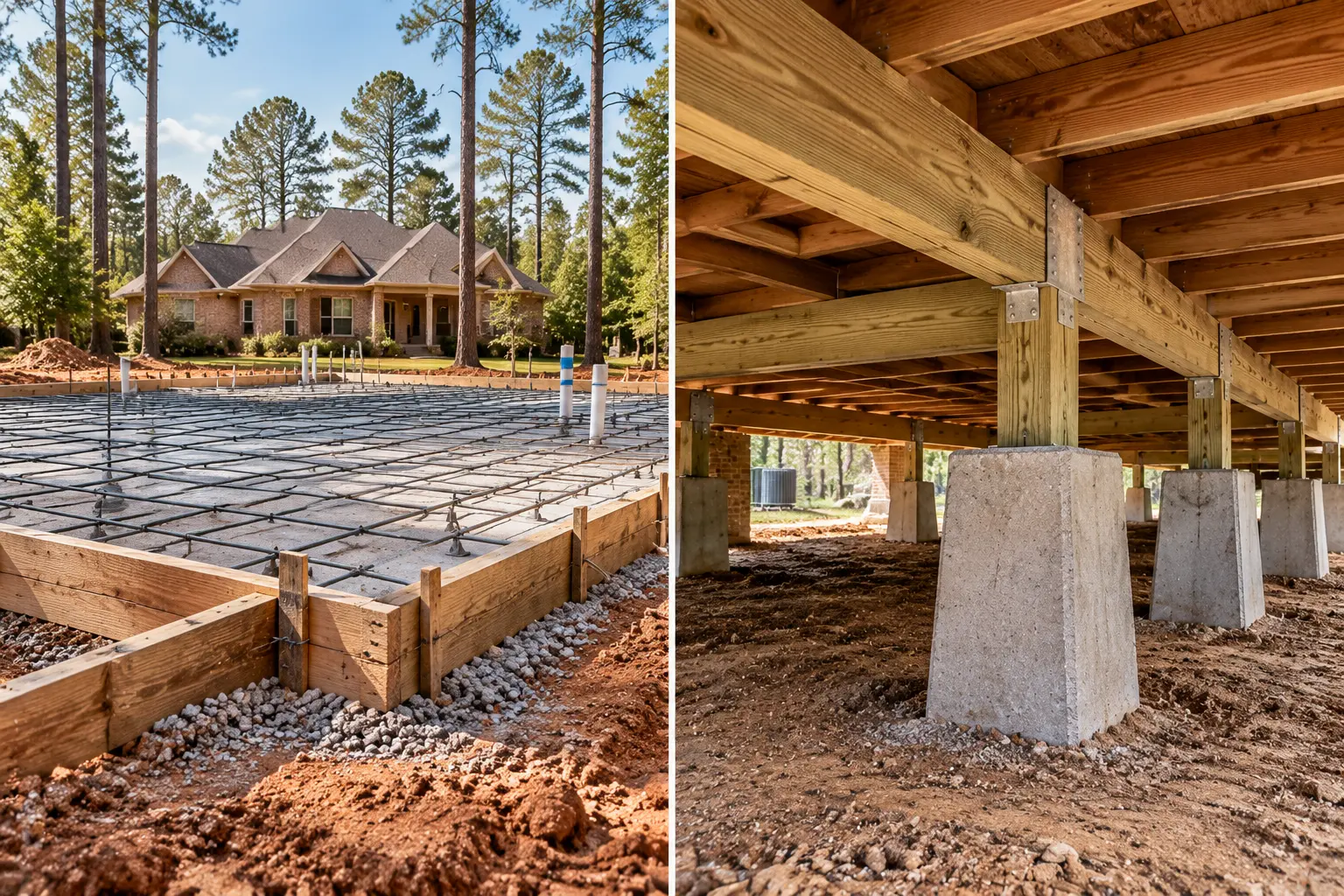
Concrete slabs bear on prepared ground and may include conventional reinforcement or post-tension systems. Problems can involve settlement, heave, plumbing conditions, cracks or differential movement.
Raised homes typically transfer loads through a combination of beams, joists and discrete supports. Deflection, damaged framing, crawlspace moisture and deteriorated supports can overlap.
Neither foundation type automatically requires repair because it is old. A qualified evaluation should connect observed conditions to the recommended scope.
NOT EVERY SOLUTION IS THE SAME
Use this table to compare concepts, not to select a method without a property-specific evaluation.
| Method | Often discussed for | Question worth asking |
|---|---|---|
| Push / steel piers | Certain settlement conditions with suitable bearing and structural access | How are capacity, resistance and installation depth established? |
| Helical piers | Select foundation or support applications subject to engineering review | What torque and load criteria support the design? |
| Concrete pilings | Some underpinning systems, depending on local practice and site conditions | What controls depth, load transfer and long-term performance? |
| Beam and joist repair | Pier-and-beam framing damage, rot or deficient structural members | Will moisture and support issues be addressed along with framing? |
| Drainage improvements | Site water problems that affect conditions near the foundation | Where will water be discharged without harming adjacent areas? |
For additional context, read steel vs. concrete piers and foundation settlement vs. heaving. Repair design and load calculations are engineering matters when applicable.
FROM CONCERN TO CLEARER ANSWERS
Good decisions start with diagnosis and end with a written scope you understand, not a rushed commitment.
Photograph cracks, record approximate dates and note door or floor problems. Keep observations factual; don't diagnose from photos alone.
Ask who evaluates the home, whether elevations are checked and when an independent structural engineer would be useful.
Have the provider explain proposed piers, framing repairs, drainage corrections or monitoring, with limitations and alternatives.
Look at methods, quantities, site restoration, payment schedule, permit responsibility, warranties and contractor identity.
PRICING WITHOUT THE GUESSWORK
The useful number is a property-specific written estimate, not a generic “per pier” figure taken out of context.
The same visible crack can accompany a very different diagnosis in two houses. Cost depends on repair goals, extent of movement, method, site access and work beyond the supports themselves. An engineering evaluation can also be separate from a contractor's quote.
Ask for the basis of the recommendation, itemized costs, exclusions and expected restoration work. If you receive very different bids, compare their proposed scopes before comparing bottom-line prices.
Read the complete cost guide ↗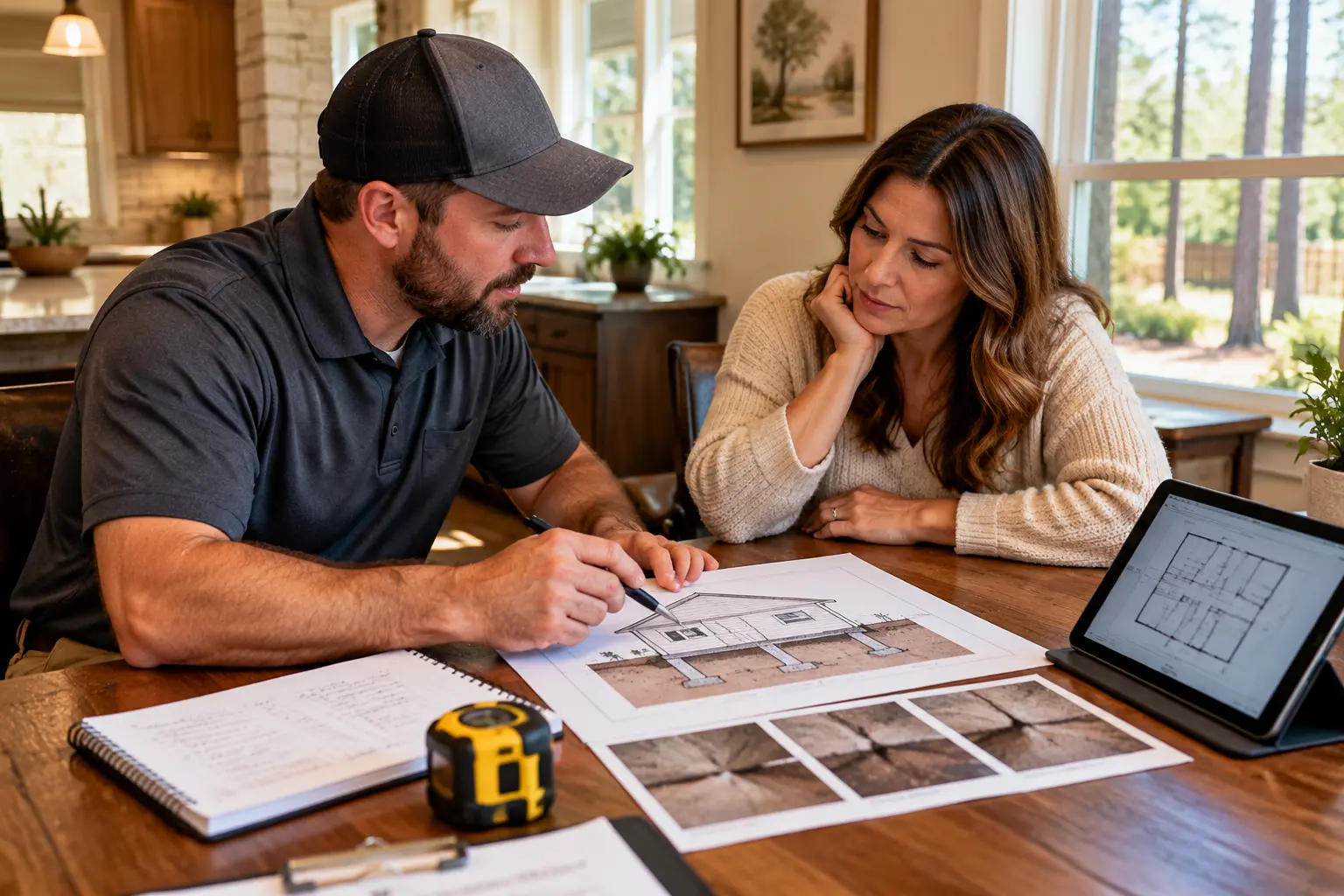
| Foundation type | Slab, pier-and-beam and other systems require different access and methods. |
|---|---|
| Severity and cause | A localized repair differs from extensive movement or structural deterioration. |
| Repair design | Underpinning type, support count, depth and engineering needs influence the scope. |
| Access and restoration | Landscaping, concrete flatwork, crawlspace clearance and utilities affect labor. |
| Drainage or plumbing | Related moisture or leak problems may need separate investigation or work. |
| Warranty and follow-up | Compare exclusions, coverage area, transferability and service obligations. |
Be careful with “free inspections.” A sales assessment and a licensed engineer's independent written report are not equivalent services.
LOCAL INFORMATION HUB
Explore local resource pages for commonly searched communities. County boundaries, site conditions and contractor availability differ by address.

Provider availability notice: These are informational city pages, not verified provider offices or guaranteed dispatch territories. Confirm active campaign eligibility by ZIP code.
Customer feedback
Read feedback shared by customers. Individual experiences and service outcomes may vary.
“Great communication and professional service throughout the process.”
“I had concerns about some cracks in my home's foundation and wanted to understand what was causing them. The team explained the inspection process and walked me through the possible solutions. I appreciated that they took the time to answer my questions instead of rushing through everything.”
“Very helpful team that made the foundation repair process easier to understand.”
“From the first conversation, the team was professional and easy to communicate with. They explained what to expect and answered my questions in a way that made sense. I appreciated the clear communication and organized approach.”
“The staff was courteous, knowledgeable, and straightforward about the available options.”
KEEP LEARNING
Focused guides cover diagnosis, repair methods, cost drivers and contractor questions without treating every foundation problem as the same.
 GUIDE 01
Costs vary by foundation type, accessibility, scope, depth, drainage and the chosen method.
Read article →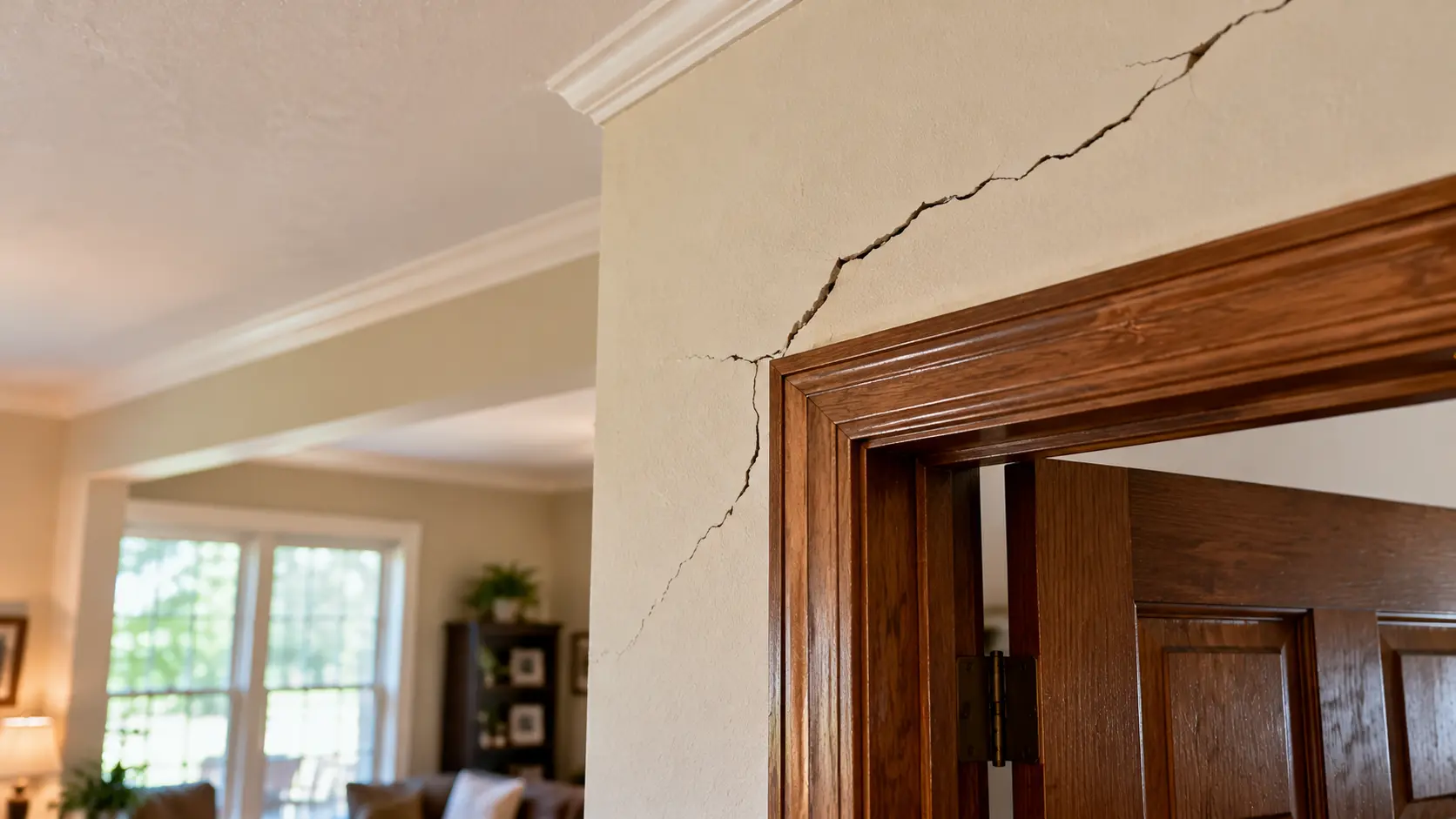 GUIDE 02
A practical guide to floor slopes, sticking doors, masonry cracks and when to request an assessment.
Read article →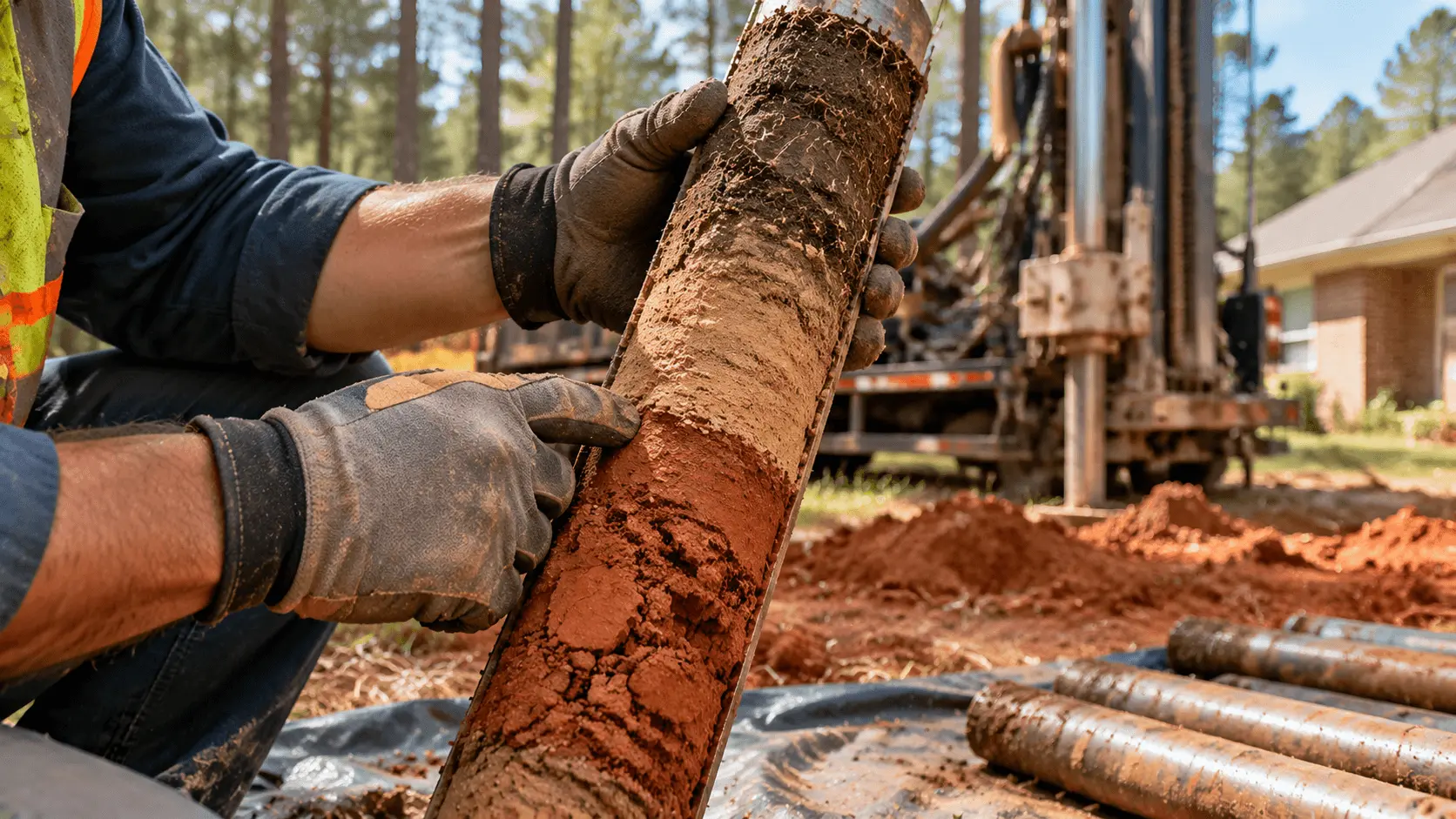 GUIDE 03
Regional soils vary. Sandy layers, clay-enriched subsoils, rainfall and drainage all deserve consideration.
Read article →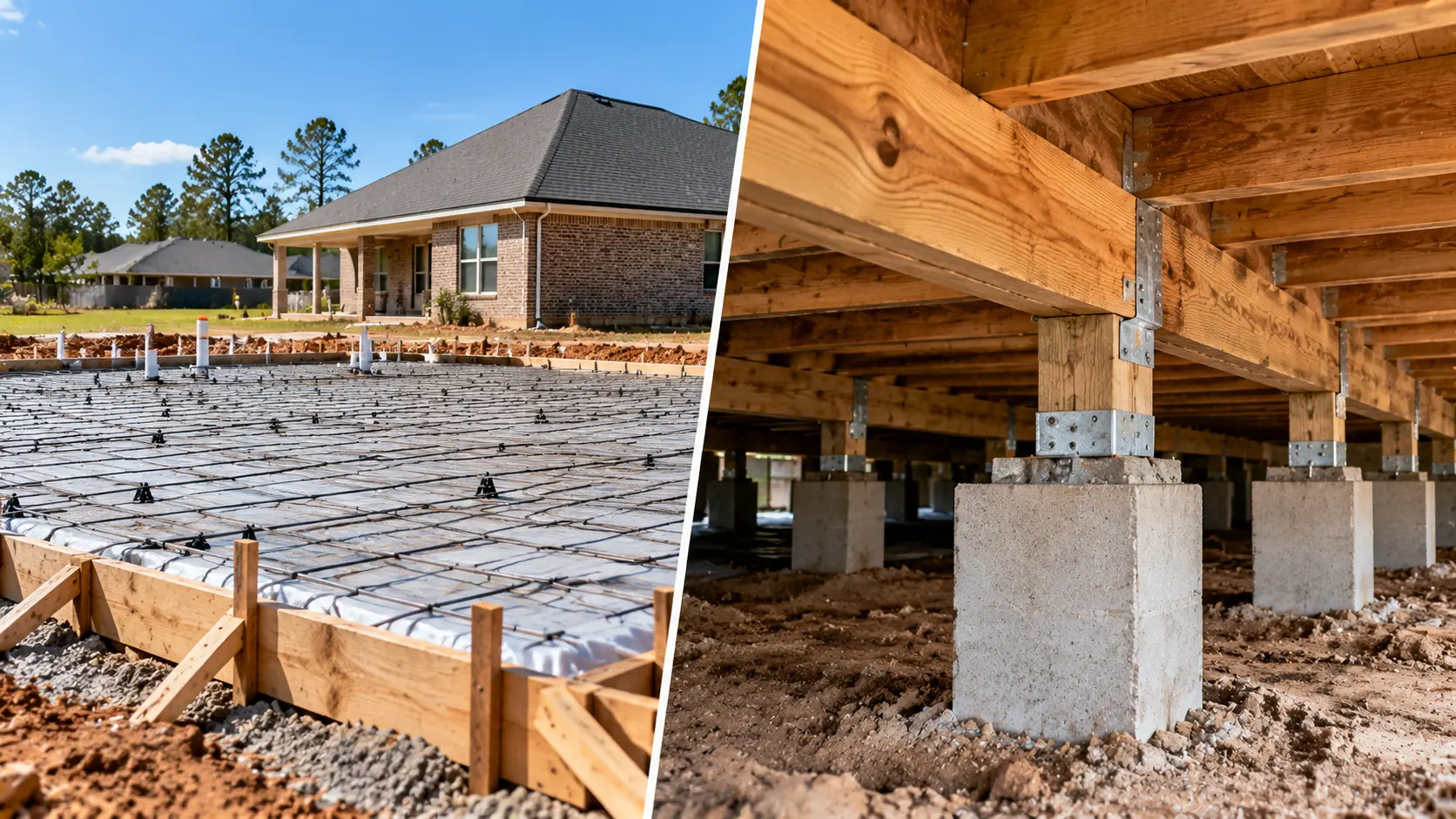 GUIDE 04
Understand differences in construction, inspection and repair approaches.
Read article →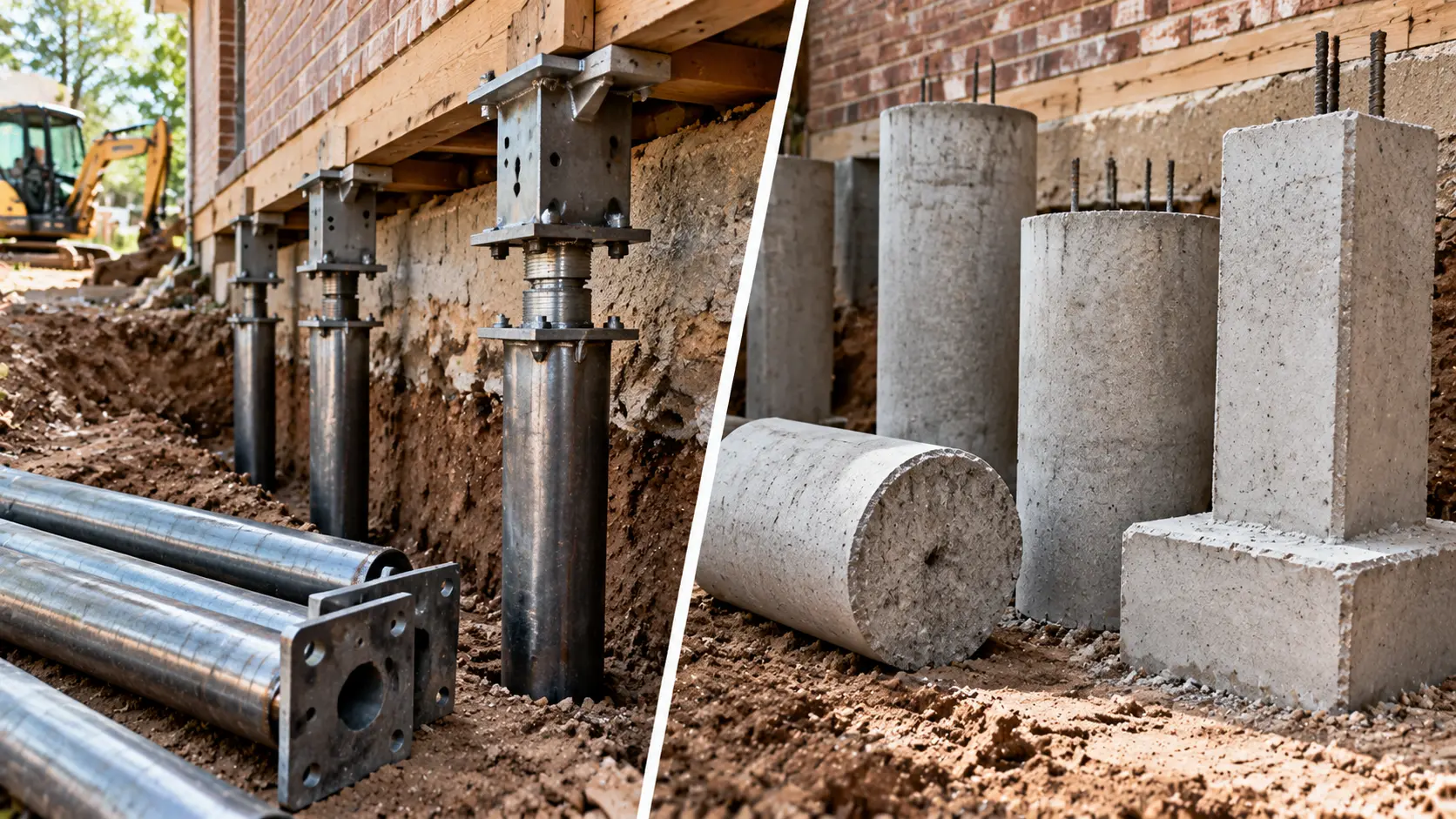 GUIDE 05
Compare installation considerations, engineering needs and questions to ask.
Read article →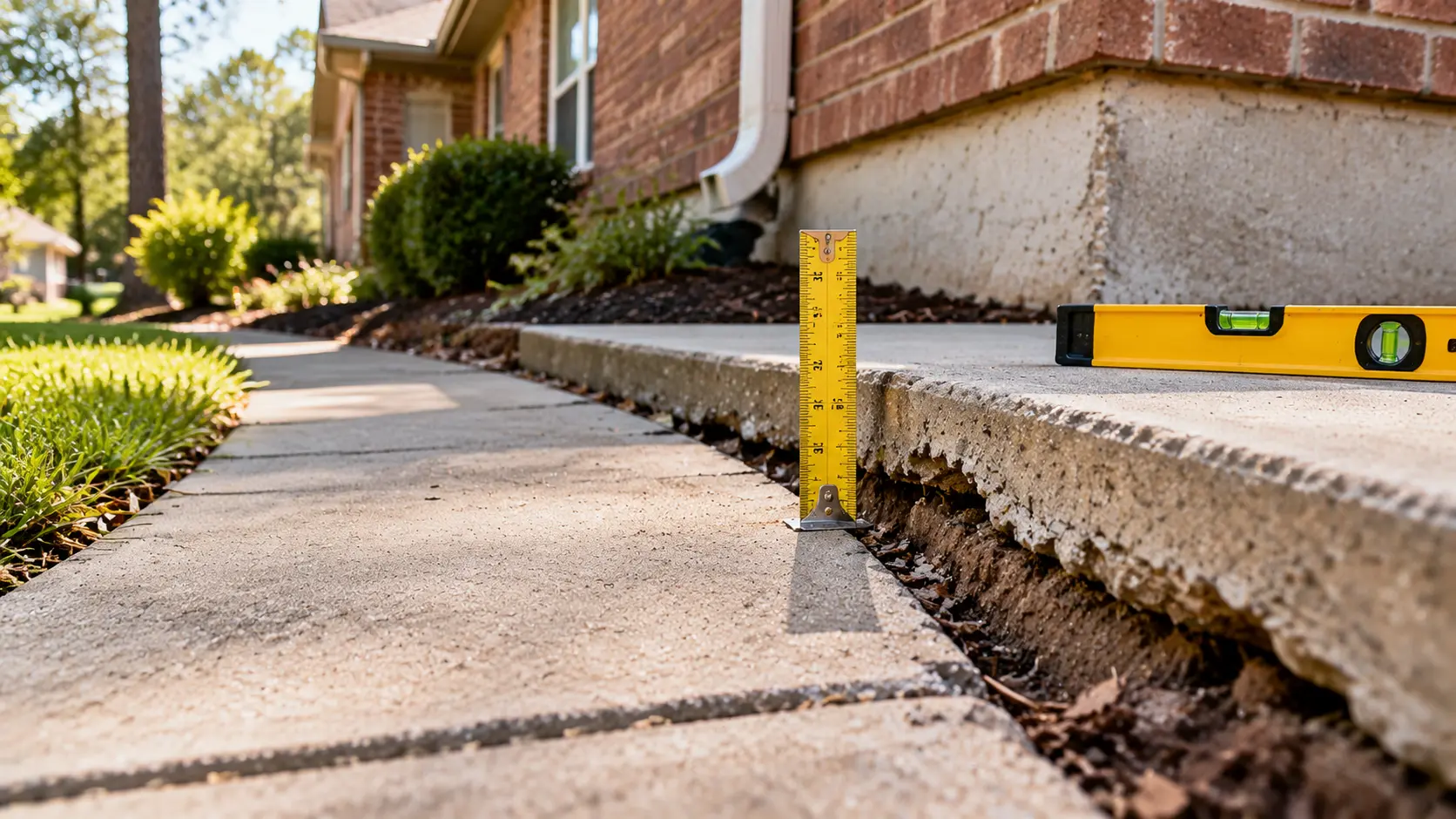 GUIDE 06
Downward and upward movement can create overlapping symptoms.
Read article →QUICK, COMPLETE ANSWERS
Common questions about diagnosis, quotes, soil, foundation types, warranties and how calls may connect to independent third-party providers.
☎ (903) 961-0463This phone number is not an emergency service.
Look for combinations of new or widening cracks, doors that suddenly bind, floor slopes, brick separation and changes that continue over time. These symptoms are reasons to investigate, not proof of a specific failure. A property-specific assessment can help separate foundation movement from framing, plumbing, drainage and cosmetic issues.
There is no trustworthy single price for every property. A quote depends on foundation construction, extent of movement, repair design, number and type of supports, site access, drainage work and any required engineering. Ask for an itemized written scope and compare what each proposal actually includes. Our detailed cost guide explains the variables without inventing a universal local average.
No. Some contractors offer complimentary initial visits or estimates, while independent structural engineers generally charge for professional evaluation. A no-cost sales visit is not the same as an engineer’s assessment. Confirm who will attend, what measurements are included and whether there is a fee before booking.
No. East Texas has a varied soil landscape including sandy or loamy surface layers, clay-rich subsoils and areas with different moisture behavior. The soil directly beneath an individual house should be evaluated rather than inferred from the city name. USDA Web Soil Survey is a useful starting point, not a substitute for a site investigation.
A concrete slab bears across a continuous foundation system, while pier-and-beam construction supports elevated framing on discrete supports. Slab work may involve evaluation of settlement, reinforcement and underpinning; pier-and-beam repair may involve piers, beams, joists, shimming and crawlspace moisture. The correct method depends on actual conditions.
Water conditions around a foundation can contribute to changes in soil moisture, erosion or other performance concerns. Gutters, grading, downspouts and subsurface drainage should be evaluated in the context of the site. Drainage improvements are not guaranteed to reverse existing structural damage, and a poorly designed drain can create new problems.
Not every hairline crack is structural. Note the location, width, displacement and whether it changes over time; compare it with other symptoms such as binding doors or floor movement. Cracks with substantial displacement, recurring movement or accompanying structural symptoms merit timely professional assessment. Simply filling a crack may not address its cause.
Duration depends on diagnostic work, engineering, permitting where required, material availability, accessibility, the repair method and any restoration work. Some limited repairs are completed more quickly than large underpinning or pier-and-beam projects. The provider should give a realistic scope-specific schedule and explain factors that might change it.
An independent Texas-licensed professional engineer can be valuable when movement is significant, diagnosis is disputed, a proposed design needs engineering or real estate documentation is involved. A contractor’s estimate and an engineer’s written opinion are different products. Ask what expertise the inspection includes and who takes responsibility for the design.
Coverage depends on your policy wording and the cause of damage. Ordinary settlement, wear and soil movement are often treated differently from sudden covered events, but exceptions and endorsements vary. Read your policy, document the damage and discuss claim questions with your insurer or an appropriately qualified professional before assuming coverage.
Read the written terms rather than relying on phrases such as lifetime warranty. Determine what exact locations and work are covered, what movement is excluded, whether the agreement transfers to a buyer, and whether inspections or maintenance are required. Verify the identity of the provider responsible for future warranty service.
No. Foundation Repair East Texas is an independent information website that may earn compensation for qualifying calls, not a foundation repair contractor or engineering firm. Calls can be routed to a participating third-party provider when available. The provider is responsible for inspections, quotations, repairs, contracts, pricing and warranties.
Our website provides local homeowner information for Tyler, Longview, Kilgore, Marshall, Lufkin, Nacogdoches, Lindale, Jacksonville, Henderson, Palestine, Athens and Whitehouse. Actual call routing and provider availability depend on the current provider coverage, the address and the requested work. A city page is not a guarantee of service.
Our phone number is not an emergency engineering or public-safety service. If you believe a structure is unsafe, leave the affected area and contact appropriate local emergency services or the responsible local authority. Do not enter a dangerous crawlspace or attempt structural lifting yourself.
CHECKABLE REFERENCES
When you are comparing foundation advice, distinguish authoritative technical guidance from marketing claims. These public resources offer useful context; none can diagnose a specific home from a website visit.
Content is educational and independently prepared for homeowners. It is not a stamped engineering analysis, on-site inspection or contractor recommendation. Read our editorial policy.
READY FOR THE NEXT STEP?
Describe your concern to a participating third-party provider, if one is available for your location and requested service. Ask about the assessment, scope and terms before agreeing to work.
Paid call disclosure: This site does not own repair vehicles, employ field technicians, conduct foundation inspections or perform repairs. Call routing is subject to campaign rules; payment for qualifying calls may apply. Any estimate, inspection, service contract or warranty is provided by the actual third-party contractor.